
Apr 30, 2026 · 8 min read · By Shaya Arya
Zereshk Polo: The Jeweled Barberry Rice of the Persian Banquet Table
"Tart crimson barberries, saffron-glazed basmati, slivered pistachio and almond — explore the showpiece rice dish of Iranian celebration."
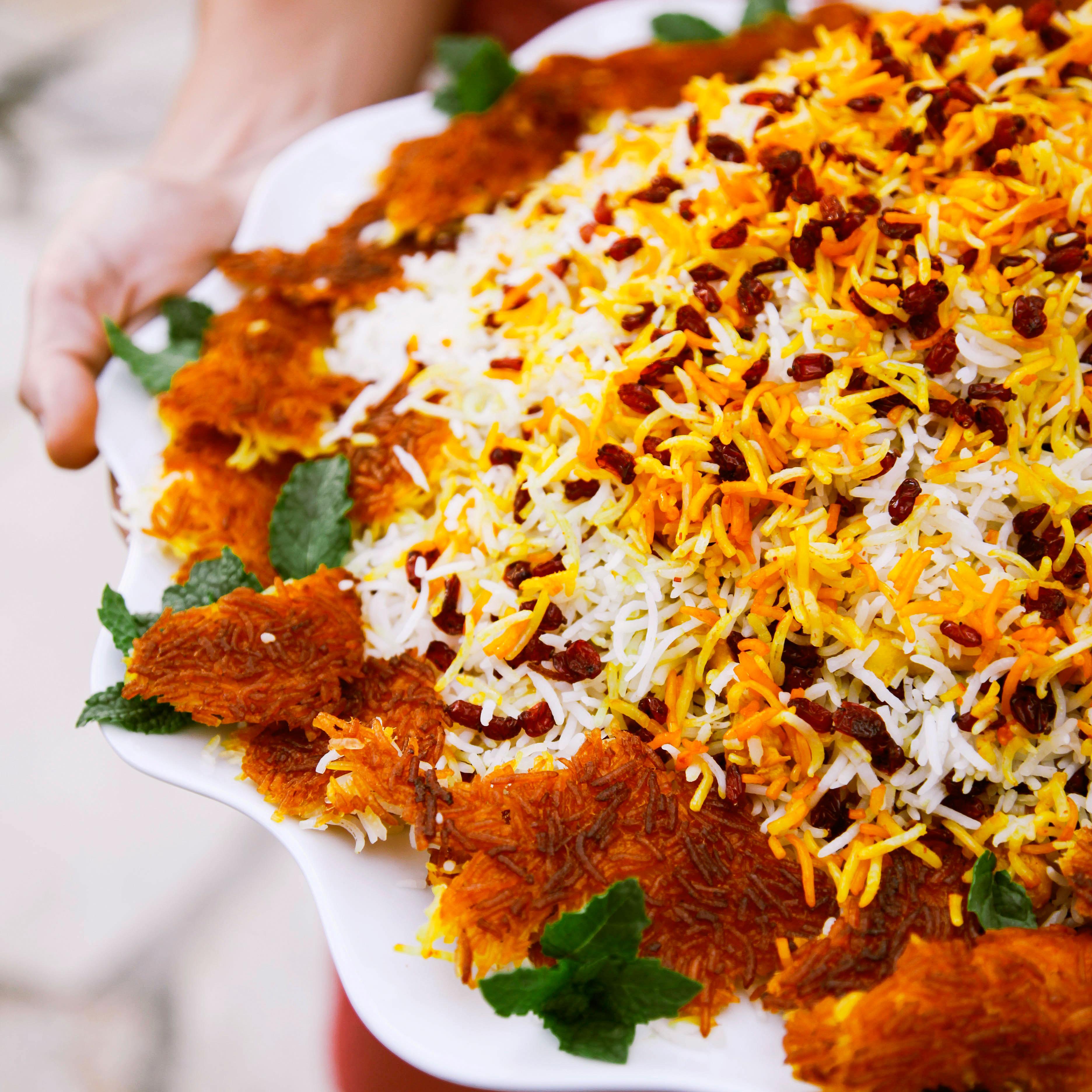
If fesenjan is the dark, soulful matriarch of the Persian dinner table, then Zereshk Polo is the radiant, jewel-encrusted bride. Built from snowy long-grain basmati rice, glossy crimson barberries, slivered almonds and pistachios, and a generous final glaze of bloomed A+ Super Negin saffron, zereshk polo is the dish Iranian families serve at engagement parties, Nowruz, and the welcoming feast for honored guests. The contrast between the brilliant red barberries, the deep gold saffron-stained rice, and the pale slivers of nuts creates one of the most photogenic plates in the entire Persian repertoire — and one of the most chemically interesting, balancing sweet, sour, floral, and savory in every spoonful.
The Barberry: Iran's Native Crimson Pearl
Zereshk is the Persian word for the dried fruit of Berberis vulgaris, the common barberry shrub. Iran is the world's leading producer, and the South Khorasan region grows over ninety percent of the global supply. The dried berries are small, bright crimson, and intensely tart — far sharper than dried cranberries, with a faint, almost wine-like resin note. Before cooking, the dried barberries are soaked in cold water for ten minutes to soften and to rinse away any sand or grit. They are then drained and sautéed briefly in butter with a pinch of sugar; the heat caramelizes the sugar, mellows the sharp tannic edge, and turns the berries into glossy, jewel-like beads. Without the sugar bloom, the raw acidity of the barberries would overwhelm the rice; with it, they become a perfectly balanced sweet-and-sour accent.
Parboiling and Layering the Rice
Persian rice (chelow) begins with high-quality, long-grain aged basmati — preferably soaked in salted water for at least an hour to relax the starch and encourage maximum grain elongation during cooking. The rice is parboiled in a large pot of vigorously boiling salted water for roughly seven minutes, until the grains are tender at the edges but still firm at the core. It is drained immediately into a wide colander and rinsed gently with cool water to halt the cooking. A heavy-bottomed nonstick pot is then layered with a thin film of vegetable oil, melted butter, and a few tablespoons of water mixed with bloomed saffron. A first layer of rice is mounded into a pyramid, then dotted with the sautéed barberries, slivered almonds, and pistachios. This layering process is repeated until the entire pot is filled, ending with a final mound of plain rice on top to crown the structure.
The Damkoni Steam Seal
Once the rice is layered, the cook drapes a clean kitchen towel — the damkoni — over the rim of the pot before securing the lid. The cloth absorbs the rising water vapor, preventing condensation from dripping back down onto the rice and ruining the texture. The pot is cooked over medium-high heat for ten minutes to generate steam, then dropped to very low heat for forty-five minutes to an hour. Inside the sealed pot, the bottom layer of rice fries gently in the butter and saffron-tinted oil, forming the prized tahdig crust, while the rice above steams slowly, swelling each grain to nearly twice its original length. The barberries soften and release their tart, slightly winey juice into the surrounding rice, while the saffron infuses the pot with its golden hue and floral honey aroma.
The Final Saffron Glaze and Plating
When the rice is ready, the cook prepares a final, more concentrated saffron bloom: roughly fifteen threads ground with a pinch of sugar, steeped in two tablespoons of warm water for ten minutes. A portion of the snowy white rice is removed from the pot and tossed gently with this saffron infusion, turning that portion a brilliant marigold orange. The plain white rice is mounded onto a serving platter, the saffron-stained rice is sprinkled artfully on top, and the entire mound is showered with the remaining sautéed barberries, almonds, and pistachios. Some cooks add a final flourish of dried rose petals or a drizzle of saffron-infused butter for shine. The golden tahdig is broken from the bottom of the pot and served alongside on its own platter — the crown jewel of the meal.
Pairings: Saffron Chicken and the Wedding Feast
Zereshk polo is almost always served with morgh-e za'farani — a slow-braised saffron-and-tomato chicken — alongside a small bowl of plain yogurt and a plate of fresh herbs (sabzi khordan). The braised chicken's savory depth and the sharp tartness of the barberries balance each other in a way that few rice dishes can match. For Casa Zafferano customers planning a Persian celebration meal in Seattle or anywhere across the United States, we recommend reserving your finest A+ Super Negin saffron for this dish: zereshk polo is a feast for the eyes as much as for the palate, and the difference between a deep, glowing tahdig and a pale, washed-out one comes down almost entirely to the grade of saffron in your kitchen.
Published by Shaya Arya
More from the Journal
Apr 09, 2026
Moroccan Tagine and Saffron: The Slow-Cooked Soul of North African Cuisine
Inside the conical clay vessels of Marrakech and Fez, saffron meets preserved lemon, ginger, and slow-simmered meat to define one of the world's great cuisines.
Apr 08, 2026
Uzbek Plov: The Saffron-Crowned Centerpiece of Central Asian Hospitality
From Samarkand to Tashkent, the cast-iron kazan and the saffron-perfumed plov define a culinary tradition that has fed Silk Road travelers for over a thousand years.