
Apr 26, 2026 · 8 min read · By Shaya Arya
Shahi Tukda: The Royal Mughal Saffron Bread Pudding of Hyderabad and Delhi
"From the kitchens of the Mughal emperors, an opulent dessert of ghee-fried bread, reduced saffron milk, and slivered nuts that defines Indian celebration."
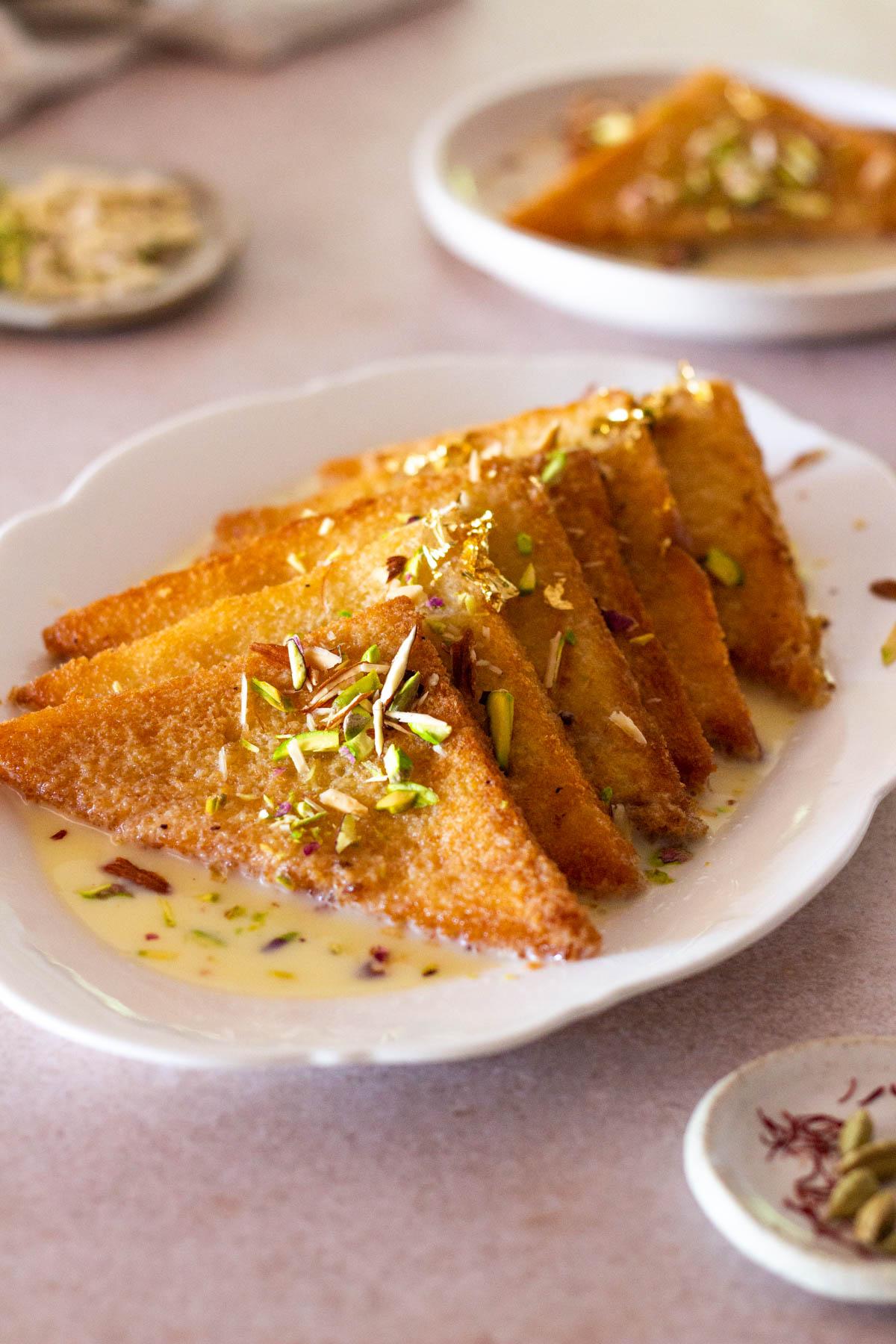
In the great culinary inheritance left behind by the Mughal Empire, no dessert speaks more clearly of imperial opulence than Shahi Tukda — literally 'royal piece' in Urdu. Born in the kitchens of Delhi and refined in the princely courts of Hyderabad, where it is also known as Double ka Meetha, this dish takes humble white bread and transforms it through a sequence of ghee-frying, sugar-syrup soaking, and a final crown of reduced saffron milk (rabri) into a dessert of unmistakable royal pedigree. Garnished with slivered pistachios, almonds, and edible silver leaf (varak), Shahi Tukda is the dessert traditionally served at Eid celebrations, weddings, and the formal feasts that mark important family milestones across North India and Pakistan.
The Bread Foundation: Crisp, Buttery, Caramelized
Shahi Tukda begins with thick slices of slightly stale white bread — the staleness is intentional, as drier bread absorbs the sugar syrup more uniformly. The crusts are trimmed away, leaving clean rectangles of pure crumb. The slices are deep-fried in clarified butter (ghee) over medium heat until they develop a deep golden-brown crust on both sides, with a faint nutty caramelization at the edges from the toasted milk solids in the ghee. This frying step is the foundation of the dessert: it provides structural integrity that will withstand the subsequent soaking in syrup and milk, and it adds a deep, buttery flavor that no other cooking method can produce. Some modern chefs substitute oven-toasting for the deep-fry, but the result is never the same — ghee-fried bread carries an unmistakable richness that defines authentic Shahi Tukda.
The Sugar Syrup Soak
While the bread is frying, a simple sugar syrup is prepared in a separate saucepan: granulated sugar, water, a few green cardamom pods, and a small splash of rosewater are brought to a simmer until the sugar fully dissolves and the syrup thickens slightly. The fried bread slices are dipped briefly into the warm syrup — just five to ten seconds per side — and immediately removed and placed on a serving platter. The dip must be brief: too long and the bread turns to mush. Done correctly, the bread absorbs just enough syrup to sweeten the crumb while retaining a crisp, structural outer crust. The cardamom and rosewater perfume the syrup with a delicate floral lift that prepares the palate for the saffron rabri to come.
The Rabri: The Reduced Saffron Milk
The defining element of Shahi Tukda is its rabri — a slow-reduced sweetened milk infused generously with saffron. Whole milk is poured into a wide, heavy-bottomed pan and simmered slowly over low heat, with frequent stirring to prevent scorching. As the water evaporates, the milk thickens and develops a deep, almost caramelized dairy flavor. After roughly an hour, the milk has reduced to roughly one-third its original volume and developed a thick, custard-like consistency. At this moment, sugar, a few cardamom seeds, and a generous infusion of bloomed A+ Super Negin saffron are stirred in. The saffron immediately turns the rabri a brilliant butter-gold, and the fat-soluble safranal aroma binds with the concentrated dairy lipids, suffusing the rabri with the unmistakable floral honey note that defines royal Mughal cuisine.
Plating and the Final Crown
The fried, syrup-soaked bread slices are arranged on a flat serving platter, and the warm saffron rabri is spooned generously over the top, soaking into the crumb. The dessert is then garnished lavishly: slivered pistachios for green color and crunch, chopped almonds for buttery richness, dried rose petals for floral fragrance, and — for the most royal presentations — a thin layer of edible silver leaf (varak) draped delicately across the surface. The silver leaf catches the light and gives the dessert its signature shimmering, regal appearance. Some cooks add a final flourish of saffron threads scattered across the silver, creating a brilliant red-on-silver pattern that recalls the painted miniatures of Mughal court art.
Why Premium Saffron Defines the Dish
Shahi Tukda is built around saffron's interaction with concentrated dairy fat, and the spice grade determines everything. Low-grade saffron will produce a muddy, brownish rabri with little aroma. A+ Super Negin saffron, with its deep crocin density and intense safranal aroma, produces the brilliant gold color and floral fragrance that royal Mughal kitchens once demanded. At Casa Zafferano, we recommend our hand-trimmed Super Negin specifically for this dessert: the high concentration of bioactive compounds ensures that even a small pinch — roughly twenty-five threads for a six-person serving — delivers the full sensory experience that earned this dessert its 'royal piece' name three centuries ago.
Published by Shaya Arya
More from the Journal
Apr 09, 2026
Moroccan Tagine and Saffron: The Slow-Cooked Soul of North African Cuisine
Inside the conical clay vessels of Marrakech and Fez, saffron meets preserved lemon, ginger, and slow-simmered meat to define one of the world's great cuisines.
Apr 08, 2026
Uzbek Plov: The Saffron-Crowned Centerpiece of Central Asian Hospitality
From Samarkand to Tashkent, the cast-iron kazan and the saffron-perfumed plov define a culinary tradition that has fed Silk Road travelers for over a thousand years.