
May 12, 2026 · 7 min read · By Shaya Arya
Liquid Velvet: Saffron Masala Chai and the Spices of the Silk Road
"Trace the sensory history and chemical harmony of black tea, fresh cardamoms, ginger, and hand-trimmed Afghan saffron."
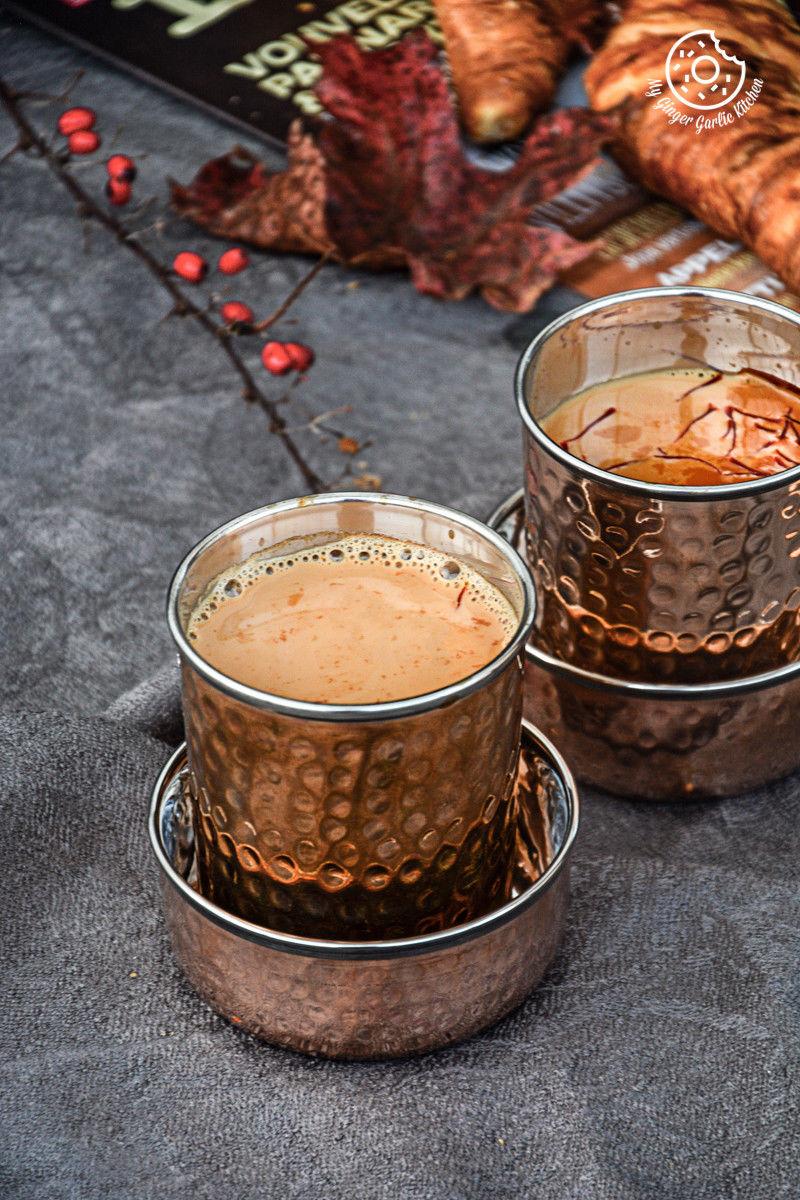
There is a profound warmth in a steaming cup of authentic masala chai. In the busy street markets of Mumbai and the quiet mountain villages of the Himalayas, chai wallahs spend their days boiling pots of strong black tea, fresh milk, and a robust mixture of crushed warming spices. When you crown this traditional preparation with a generous pinch of hand-trimmed Herat saffron, you create a drink of unparalleled luxury—a velvety elixir that traces its roots directly back to the ancient trading caravans of the Silk Road, where spices were valued as highly as precious gems.
The Convergence of Warming Botanicals
The magic of Saffron Masala Chai lies in how its diverse spices interact with one another. The sharp, gingerol-driven heat of fresh ginger root stimulates circulation and prepares the sensory receptors. The sweet, cooling qualities of green cardamom and cinnamon follow, offering a fragrant lift. Finally, as the saffron is added in the last moments of boiling, its complex, earth-and-honey esters weave through the spices, smoothing out the sharp edges and binding the aromas into a single, cohesive sensory experience. The heavy proteins and fats in the milk act as carriers, holding these diverse volatile oils in suspension.
This combination is also a powerful Ayurvedic tonic. Ginger and black pepper support digestion, cardamom targets bloating, and saffron acts as a gentle nervine, calming the nervous system while providing a strong dose of protective antioxidants. It is a comforting, whole-body shield against seasonal chills, wrapped in the creamy sweetness of hot milk. Drinking Saffron Masala Chai is an act of grounding, a moment of sensory pause that warms you from the inside out.
The Street Style Brew
To brew this at home, boil water with crushed ginger, cardamom pods, a cinnamon stick, and a single clove. Add a strong Assam or Ceylon black tea and let it simmer for three minutes until deep and dark. Pour in whole milk and bring the pot to a rolling boil. Just as the milk rises, remove the pot from the heat, drop in a generous pinch of crushed saffron threads, cover, and let it steep for five minutes. Strain into a cup, sweeten with raw cane sugar, and watch the cream turn a gorgeous, buttery gold that smells of sweet hay and mountains.
The Physics of the Rolling Boil
In the bustling street stalls of India, chai wallahs rely on a physical technique called 'aeration' to perfect their brew. By repeatedly lifting the hot tea with a large ladle and pouring it back into the bubbling pot from a height, they introduce air into the liquid. This aeration process cools the tea slightly, emulsifies the milk fats with the black tea tannins, and volatilizes the aromatic oils of the cardamom and ginger. When the ground saffron is added during the final, off-heat steep, this whipped, emulsified base is perfectly primed to absorb the delicate crocin and safranal, resulting in a velvety, deeply integrated tea with a thick, aromatic foam.
Published by Shaya Arya
More from the Journal

Apr 09, 2026
Moroccan Tagine and Saffron: The Slow-Cooked Soul of North African Cuisine
Inside the conical clay vessels of Marrakech and Fez, saffron meets preserved lemon, ginger, and slow-simmered meat to define one of the world's great cuisines.
Apr 08, 2026
Uzbek Plov: The Saffron-Crowned Centerpiece of Central Asian Hospitality
From Samarkand to Tashkent, the cast-iron kazan and the saffron-perfumed plov define a culinary tradition that has fed Silk Road travelers for over a thousand years.