
May 01, 2026 · 10 min read · By Vikram Taneja
Paella Valenciana Decoded: The Authentic Saffron Rice of Spain's Levante Coast
"Beyond the tourist version, real Valencian paella is a precise act of culinary geometry — saffron broth, Bomba rice, and a paper-thin socarrat crust."
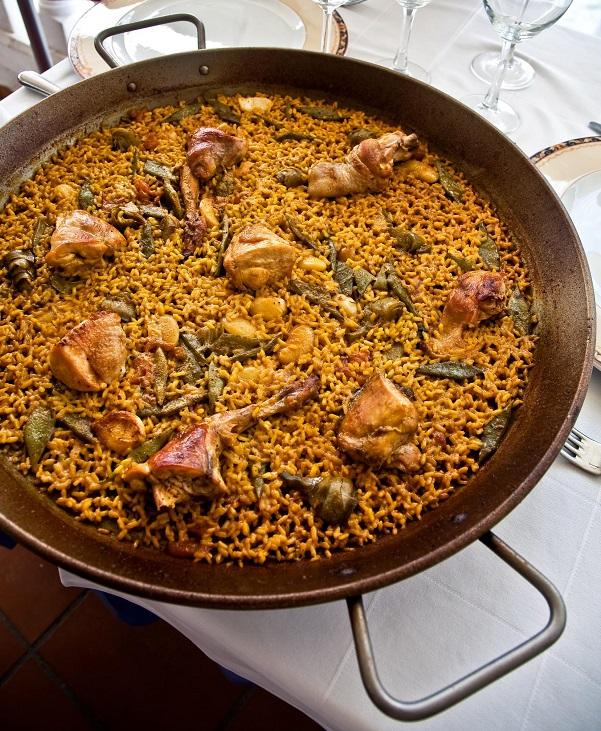
There is perhaps no dish more misunderstood outside of its homeland than Paella Valenciana. Across the world, the word 'paella' has become a loose shorthand for any saffron-tinted rice cooked in a wide, flat pan — often with chorizo, peas, peppers, mussels, and shrimp piled high in a flavor-confused jumble. To a true Valencian, however, paella is a precisely defined dish with an official ingredient list, traditional fire-cooking technique, and a strict rice-to-broth-to-saffron ratio that has been protected since the twentieth century. The genuine article is austere, elegant, and almost mathematical in its construction. At its center sits the most expensive spice in the world, doing what only saffron can do: turning ordinary short-grain rice into something glowing and unforgettable.
The Official Ingredient List
In 2012, a committee of veteran Valencian cooks established a list of ten ingredients that define authentic Paella Valenciana: short-grain Bomba or Senia rice, olive oil, water, salt, saffron, sweet paprika, ripe tomato, rabbit, free-range chicken, flat green beans (ferradura), and large white lima beans (garrofó). Some traditional variants also include snails, fresh rosemary, and artichoke. Notably absent from the official list: chorizo, seafood, peas, bell peppers, and onions. Adding any of these to a Valencian paella will earn an immediate and irreversible correction from a Valencian grandmother. Paella Valenciana is, fundamentally, a rural dish from the orange-grove farmlands of the Levante coast — a peasant-shepherd meal designed around what was at hand: a wide pan over open wood fire, the day's small game, vegetables from the kitchen garden, and a precious pinch of locally grown La Mancha saffron.
The Bomba Rice Chemistry
Bomba is not just any short-grain rice; it is a remarkably absorbent cultivar that can drink up nearly three times its volume in broth without bursting. Where ordinary risotto rice (Arborio or Carnaroli) releases starch into the cooking liquid to create a creamy sauce, Bomba retains its starch internally, swelling outward while keeping each grain intact and slightly al dente. This is essential for paella, which is never stirred. The cook lays the rice into the broth, distributes it in an even layer across the pan, and then leaves it completely alone for the duration of the cook. The Bomba grains absorb the saffron-scented broth from all sides, and because the rice does not release starch into the liquid, the broth remains thin enough to evaporate cleanly, leaving a dry, perfumed grain rather than a creamy porridge.
Constructing the Saffron Broth
The saffron broth is what gives paella its identity. The cook begins by browning the rabbit and chicken pieces in olive oil directly in the wide, flat paella pan. Once the meat is well-rendered and the bottom of the pan is glazed with caramelized fond, the green beans and lima beans go in. Grated ripe tomato is added next, cooked down until it darkens into a sofrito, and dusted with sweet pimentón paprika. Cold water is then poured in to cover the meat by roughly two inches, and the broth is simmered for fifteen to twenty minutes to extract the gelatin from the rabbit bones and chicken thighs. At this stage, a small infusion of bloomed A+ Super Negin saffron is stirred into the broth, which immediately blooms into a deep amber-gold. The water-soluble crocin in the saffron dyes the broth uniformly, while the fat-soluble safranal binds to the olive oil and rendered chicken fat, ensuring that the aroma will travel deep into every grain of rice.
The Socarrat: The Crisp Saffron Crust
Once the rice is laid into the simmering broth, the heat is held steady until the liquid has fully evaporated — roughly seventeen minutes. The cook resists the urge to stir or even peek. As the broth disappears, the rice at the bottom of the pan begins to fry in the residual olive oil and rabbit fat. This is the moment when the prized socarrat begins to form: a thin, lacquered, deeply caramelized crust of rice grains fused together by Maillard browning and saffron-stained oil. A properly trained ear can hear the socarrat develop — the sound shifts from a gentle simmer to a faint, popping crackle. At that exact moment, the cook removes the pan from the heat, covers it with a clean kitchen towel or a sheet of newspaper, and lets it rest for five minutes. The rest allows residual heat to finish the rice while the socarrat sets into a thin, snapping crust at the bottom that diners will scrape up with a spoon — the most prized part of the dish.
Saffron Quality and Regional Tradition
Spain has its own celebrated saffron-growing region in Castilla-La Mancha, but the same chemical principles that make La Mancha saffron great also make hand-trimmed Afghan A+ Super Negin saffron an outstanding choice for paella: a high crocin concentration, robust safranal aroma, and the structural integrity of all-red threads with no yellow style content. For a paella serving six diners, a single pinch — roughly thirty threads, bloomed in three tablespoons of warm broth — is sufficient to color and perfume the entire pan. The saffron is what transforms paella from a humble peasant meal into the cultural icon it has become, and it is worth every careful thread you commit to the broth.
Published by Vikram Taneja
More from the Journal
Apr 09, 2026
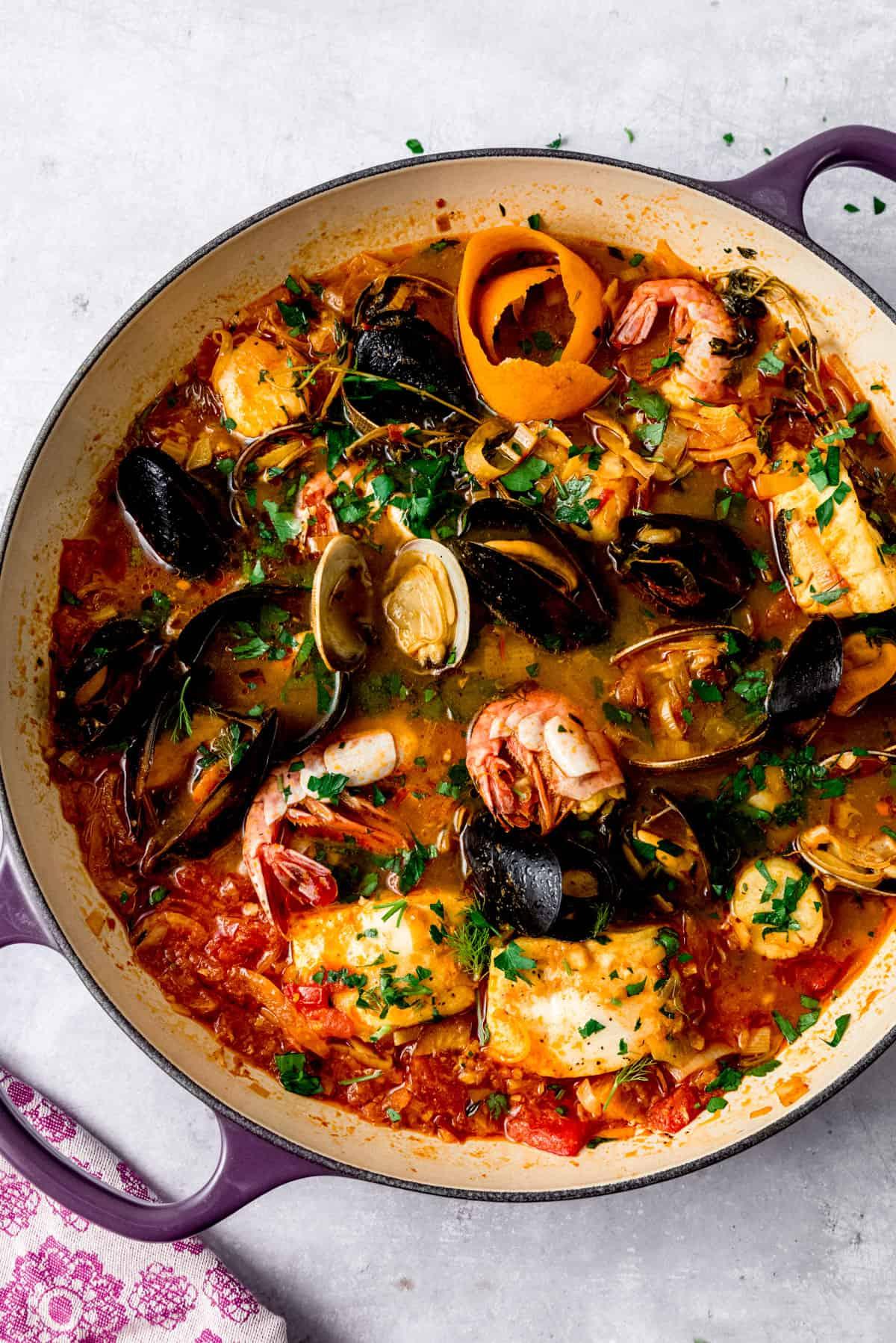
Moroccan Tagine and Saffron: The Slow-Cooked Soul of North African Cuisine
Inside the conical clay vessels of Marrakech and Fez, saffron meets preserved lemon, ginger, and slow-simmered meat to define one of the world's great cuisines.
Apr 08, 2026
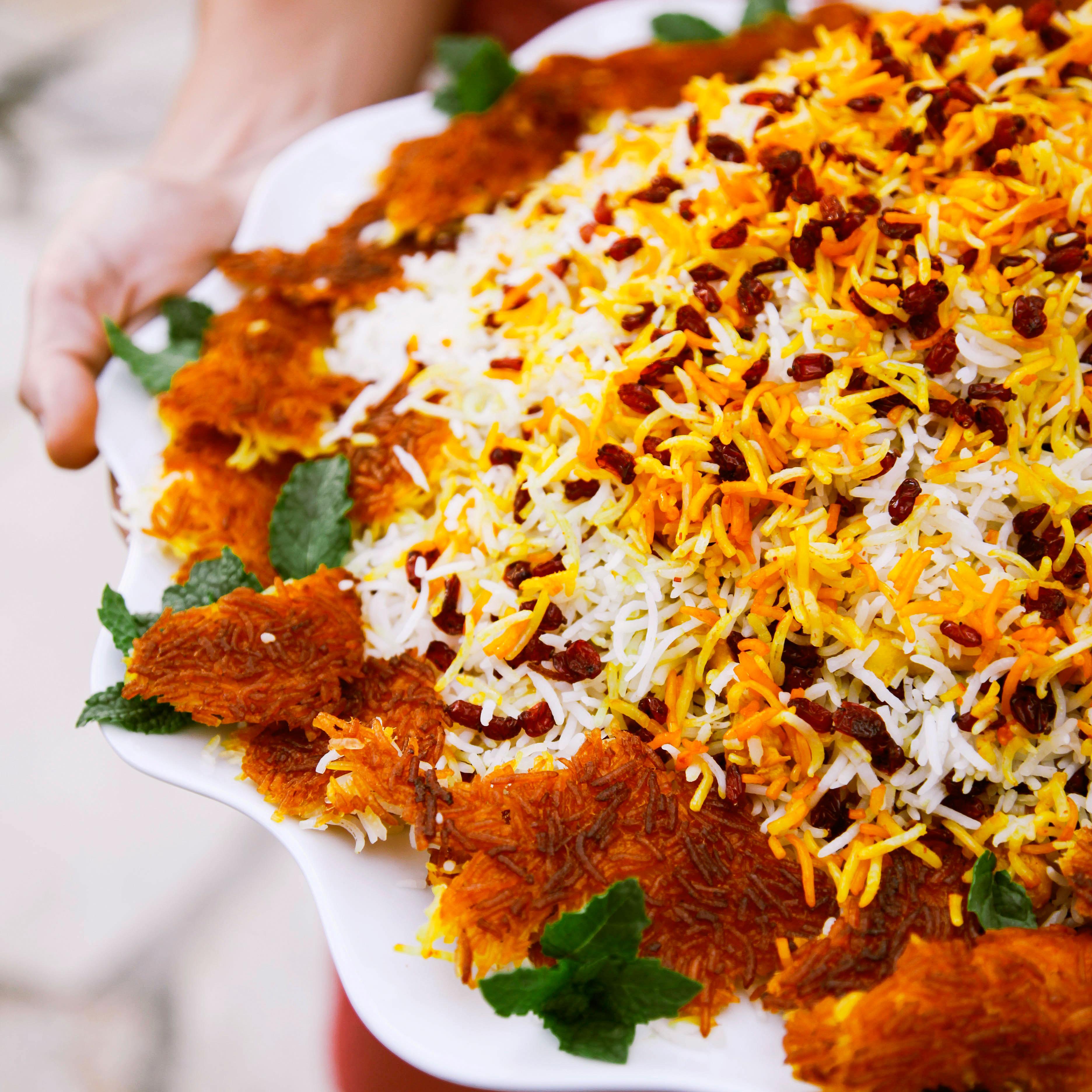
Uzbek Plov: The Saffron-Crowned Centerpiece of Central Asian Hospitality
From Samarkand to Tashkent, the cast-iron kazan and the saffron-perfumed plov define a culinary tradition that has fed Silk Road travelers for over a thousand years.