
Apr 29, 2026 · 9 min read · By Vikram Taneja
Risotto alla Milanese: The Golden Heart of Northern Italian Cuisine
"A 600-year tradition of bone marrow, Carnaroli rice, and Lombard saffron — explore how Milan's signature risotto became the global standard for saffron in Italian cooking."
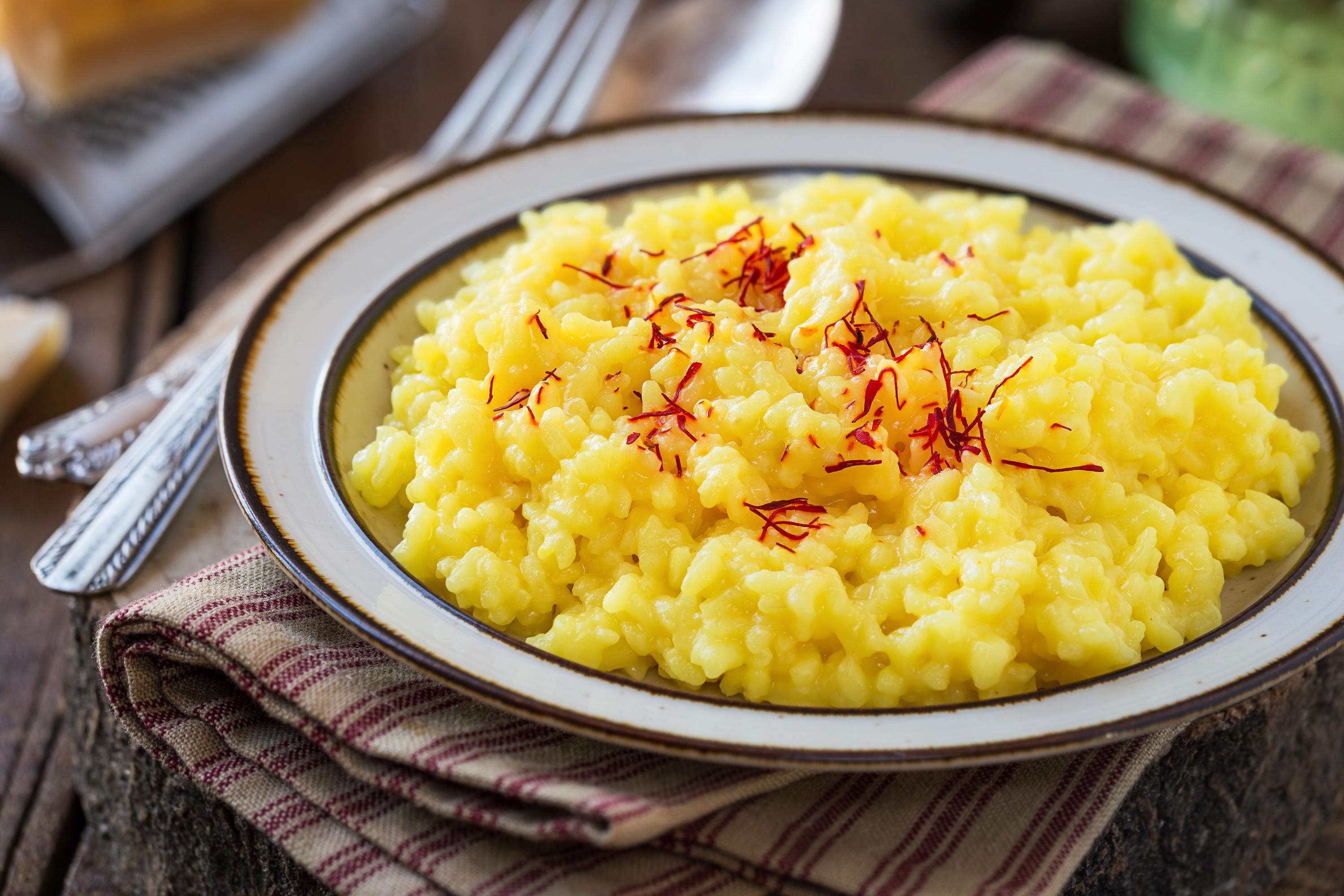
On a cold winter evening in Milan, there is no dish that warms a Lombard table quite like Risotto alla Milanese. Brilliant gold, glossy with butter, perfumed with saffron, and built on the slow release of starch from carefully toasted Carnaroli rice, this is the dish that defined Northern Italian cuisine for the better part of six centuries. Legend traces its invention to 1574, when a young stained-glass artist named Valerio di Fiandra is said to have tossed a pinch of saffron — the same one he used to brighten the windows of Milan's Duomo cathedral — into a celebratory bowl of rice at his daughter's wedding feast. The dish was an instant sensation, and it has remained the unchallenged symbol of Milanese hospitality ever since.
Carnaroli: The King of Italian Risotto Rice
Where Spanish paella relies on Bomba rice's high absorbency and low starch release, Italian risotto demands precisely the opposite. Risotto rice — Carnaroli, Arborio, or Vialone Nano — is prized for its ability to release starch into the cooking liquid while still holding its grain structure. Carnaroli, often called the king of Italian rices, has the highest amylose content of the three, meaning it releases the most starch while remaining the firmest at the bite. This is exactly what makes risotto: a creamy, sauce-bound rice in which each grain remains al dente at the center, suspended in a velvety emulsion of starch, butter, and broth. The key to coaxing the starch out is constant, gentle stirring — a slow, meditative motion that gradually agitates the grains and releases their interior chemistry into the surrounding liquid.
The Bone Marrow Foundation
Authentic Risotto alla Milanese begins with a soffritto of finely diced shallot or onion sweated in a generous knob of butter — often joined by a small amount of beef bone marrow, which is the secret behind the dish's profound, almost meaty richness. The marrow melts slowly into the butter, lending a savory umami depth that ordinary risottos lack. The Carnaroli rice is then added to the pan and tostato — toasted — for two to three minutes, until the grains turn translucent at the edges and emit a faint, nutty aroma. This toasting step is essential: it begins to gelatinize the surface starch and locks the grain structure into place, preventing the rice from disintegrating during the long cook ahead.
Ladling Broth and the Slow Build
Once the rice is toasted, a splash of dry white wine — traditionally a crisp Lombard variety — is added to deglaze the pan. As the wine evaporates, hot beef or chicken broth is added one ladle at a time. The cook stirs continuously, never allowing the rice to dry out, but also never drowning it. The process takes roughly eighteen minutes from the first ladle, with broth added gradually as each previous ladle is absorbed. Around the twelve-minute mark, when the rice is nearly tender, the cook stirs in a generous infusion of bloomed A+ Super Negin saffron. The saffron's water-soluble crocin immediately stains the entire dish a brilliant, glowing gold, while the fat-soluble safranal binds to the butter and beef marrow, weaving the saffron aroma through every grain. From this point on, the kitchen smells unmistakably of Milan.
Mantecatura: The Final Creaming
The final and most important step of risotto is the mantecatura — the creaming. The pan is removed from the heat and a final, generous knob of cold butter and a handful of finely grated Parmigiano-Reggiano are stirred in vigorously. The cold butter shocks the starchy rice, encouraging it to release a final wave of starch, while the cheese melts and emulsifies into a glossy, velvety sauce that coats every grain. The result, when properly executed, is described in Italian as all'onda — 'wavy.' When the pan is gently shaken, the risotto should ripple like a slow ocean swell, never gluey or paste-like. Plated on a wide, flat dish and tapped lightly so the rice settles into an even layer, a proper Risotto alla Milanese should spread to the edges and glisten under the dining room light like a pool of liquid gold.
Why Saffron Grade Defines the Dish
Because Risotto alla Milanese is built around saffron, the grade of the spice is not an afterthought — it is the defining ingredient. Low-grade saffron will produce a muddy, brownish-yellow color and a flat, hay-like flavor. A+ Super Negin saffron, with its deep crocin density and pronounced safranal aroma, produces the brilliant marigold gold and floral honey notes that define the Milanese tradition. At Casa Zafferano, we have customers across Seattle and the broader United States who use our hand-trimmed A+ Super Negin specifically for this dish, finding that a single pinch transforms a simple supper into a true Lombard occasion. Whether served alone as a primo piatto or alongside ossobuco — the classic Milanese braised veal shank — risotto alla Milanese remains one of the great arguments for never compromising on saffron quality.
Published by Vikram Taneja
More from the Journal
Apr 09, 2026
Moroccan Tagine and Saffron: The Slow-Cooked Soul of North African Cuisine
Inside the conical clay vessels of Marrakech and Fez, saffron meets preserved lemon, ginger, and slow-simmered meat to define one of the world's great cuisines.
Apr 08, 2026
Uzbek Plov: The Saffron-Crowned Centerpiece of Central Asian Hospitality
From Samarkand to Tashkent, the cast-iron kazan and the saffron-perfumed plov define a culinary tradition that has fed Silk Road travelers for over a thousand years.