
May 15, 2026 · 8 min read · By Vikram Taneja
The Seafood Elixir: Marseille Bouillabaisse and Saffron's Mediterranean History
"Explore the rustic ports of Southern France and the historical trade routes that bound saffron to classical Mediterranean seafood stocks."
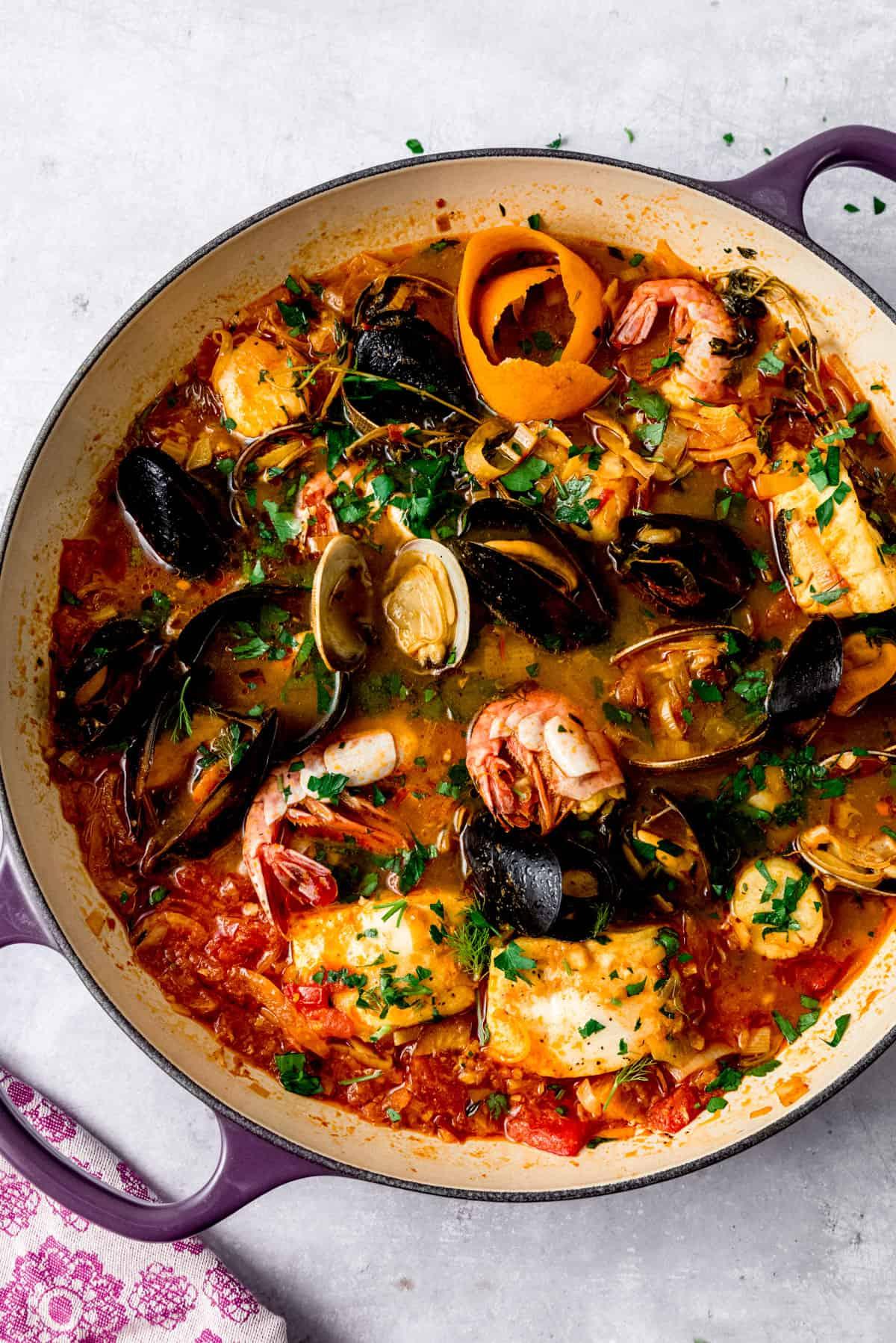
On the sun-drenched docks of Marseille, the morning air smells of salt, sea-battered wood, and the deep, aromatic steam of bubbling cauldrons. It was here, in the working-class fishing ports of Southern France, that the legendary bouillabaisse was born. Originally a humble stew thrown together by fishermen using the bony rockfish they couldn't sell at market, bouillabaisse has evolved into one of the crown jewels of French gastronomy—and its soul relies entirely on saffron. This complex dish represents the historical meeting point between ocean harvests and the ancient spice routes that crossed the Mediterranean.
The Chemistry of the Seafood Stock
A true bouillabaisse is not just a soup; it is a complex culinary emulsion. The foundation lies in a rich stock brewed from diverse, gelatinous rockfish, tomatoes, onions, garlic, fennel, and orange peel. As the fish simmer, their natural collagens dissolve into gelatin, creating a velvety body. In the final fifteen minutes of cooking, a generous infusion of bloomed saffron is stirred into the pot. Saffron acts as a critical chemical agent in this broth, its water-soluble crocin dissolving into the stock to transform it into a glowing, rusty amber broth, while the fat-soluble aroma compounds bind to the dissolved gelatin and olive oil.
Saffron also pairs chemically with the iodine notes of the fresh seafood, cutting through the potential fishiness and replacing it with a refined, earthy complexity that feels warm and deeply comforting. The presence of orange peel and fennel provides a citrusy, anise-like lift that harmonizes beautifully with the honeyed esters of our A+ Super Negin saffron, resulting in a depth of flavor that cannot be achieved with any other spice.
The Art of the Rouille
No authentic bouillabaisse is served without its signature accompaniment: rouille. This thick, garlic-laden mayonnaise is whipped with olive oil, breadcrumbs, fresh chili, and a highly concentrated saffron bloom. Saffron plays a double role here, acting as both a vibrant natural dye that turns the garlic paste a brilliant rust-orange and a flavor enhancer that bridges the raw garlic with the hot fish broth. Smeared onto toasted baguette slices and floated in the hot fish soup, the rouille melts slowly, re-emulsifying with the soup and releasing a second wave of fresh saffron aroma directly under the diner's nose, creating an incredibly rich, sensory dining experience.
The Historical Route of the Crimson Thread
The presence of saffron in Marseille is a direct reflection of the city's status as a premier Phoenician and Roman trading hub. For millennia, maritime trade routes connected the ports of Southern France with Greece, the Levant, and North Africa. Saffron, imported by Phoenician sailors, quickly became a valuable currency along the Mediterranean coast. Local fishermen, cooking their daily catch over open fires on the beaches, integrated this rare spice into their humble rockfish stews, discovering that its active compounds cut through the fish oil and preserved the shelf life of the broth. Over centuries, this rustic beachside cooking evolved into the high-art bouillabaisse we celebrate today, bridging ancient Phoenician trade with modern culinary technique.
Published by Vikram Taneja
More from the Journal
Apr 09, 2026
Moroccan Tagine and Saffron: The Slow-Cooked Soul of North African Cuisine
Inside the conical clay vessels of Marrakech and Fez, saffron meets preserved lemon, ginger, and slow-simmered meat to define one of the world's great cuisines.
Apr 08, 2026
Uzbek Plov: The Saffron-Crowned Centerpiece of Central Asian Hospitality
From Samarkand to Tashkent, the cast-iron kazan and the saffron-perfumed plov define a culinary tradition that has fed Silk Road travelers for over a thousand years.