Apr 25, 2026 · 9 min read · By Vikram Taneja
How to Identify Real Saffron: A Buyer's Guide to Spotting Counterfeits
"Saffron is the world's most counterfeited spice. Learn the visual, chemical, and sensory tests that separate genuine A+ Super Negin from cheap impostors."
Saffron is the most counterfeited spice in the world. By some estimates, more than half of the saffron sold at grocery stores, online marketplaces, and tourist bazaars is either adulterated with cheaper substitutes — safflower petals, calendula flowers, dyed corn silk — or is genuine but heavily diluted with the pale yellow style attached to the base of the stigma. With wholesale prices for top-grade saffron exceeding ten thousand dollars per kilogram, the financial incentive to cheat is overwhelming. For the home cook investing in a small tin of saffron, learning to identify the real thing is not a luxury — it is essential. Fortunately, a handful of simple visual, chemical, and sensory tests can quickly separate the genuine article from the impostors.
The Visual Inspection: Shape, Color, and Style
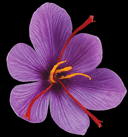
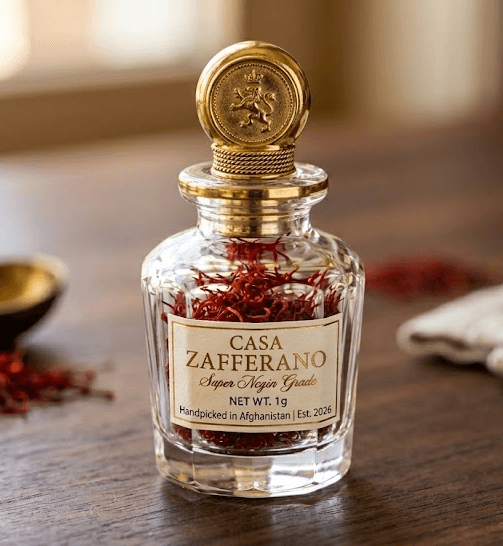
Real saffron threads are trumpet-shaped, with a flared top and a thinner base. Each thread is the dried stigma of the Crocus sativus flower, and authentic threads will show a consistent deep crimson color along their length, often deepening to nearly black at the flared end. Counterfeit saffron made from safflower petals will appear shaggy, with frayed, fibrous edges that lack the clean trumpet shape. Dyed corn silk will look uniformly red along its length but lacks the flared trumpet head. Beware also of low-grade Pushal or Sargol saffron, which is genuine but includes significant amounts of the yellow style at the base of the stigma. The yellow style contains no significant active compounds and is included by unscrupulous packers to inflate the weight. True A+ Super Negin saffron consists exclusively of the deep red tip of the stigma, hand-trimmed to remove every trace of yellow style.
The Cold Water Test
Perhaps the single most reliable home test for genuine saffron is the cold water test. Place three or four threads in a clear glass of cold (room-temperature) water and watch carefully. Real saffron will release its golden crocin pigment slowly — over fifteen to twenty minutes — creating a beautiful, pale-yellow halo around the threads that gradually expands and deepens. Critically, the threads themselves will remain red throughout the test. They do not lose their color; they release it. Counterfeit saffron, on the other hand, behaves in revealing ways. Dyed corn silk or safflower releases color almost instantly, often turning the water a deep red or orange in seconds. The threads themselves will also turn pale or white as the dye washes away. If your saffron colors the water red, or colors it in under a minute, it is not real saffron.
The Aroma Test
Real saffron carries a distinctive, complex aroma that is impossible to fake. The dominant note is warm honey, layered with dried hay, faint metallic earth, and a subtle floral lift. Some describe it as 'sweet hay,' while others detect notes of dried apricot, beeswax, and faint iodine. The aroma is potent but never sharp or chemical. Counterfeit saffron typically has either no aroma at all (corn silk and safflower are largely odorless), or an artificial, perfume-like scent if it has been sprayed with synthetic flavoring. Crush a single thread between your fingers and inhale: real saffron will release a rich, immediate burst of warm honey and hay, while fakes will smell faintly of plant matter or nothing at all.
The Bicarbonate (Baking Soda) Test
A more chemically rigorous test uses common kitchen baking soda. Dissolve half a teaspoon of baking soda in a small glass of warm water and add a few threads of saffron. Real saffron will produce a beautiful, glowing yellow solution as the alkaline environment activates the natural crocin pigments. Counterfeit saffron made with synthetic red dyes will instead turn the water dark red, brown, or murky orange — a clear signal that artificial coloring agents are present rather than natural plant pigments. This test takes only thirty seconds and is one of the most useful tools for confirming authenticity at home.
ISO 3632: The Gold Standard
Beyond home tests, the most reliable authority on saffron quality is the international ISO 3632 standard, which measures three key chemical markers: crocin (color), safranal (aroma), and picrocrocin (taste). Each marker is measured by spectrophotometric absorbance in an independent laboratory. Category I — the highest grade — requires crocin levels above 200, safranal above 20, and picrocrocin above 70. Casa Zafferano's A+ Super Negin saffron consistently exceeds Category I requirements, with crocin levels often measured at over 270. When buying saffron, look for sellers who publish their actual ISO 3632 test results rather than simply claiming 'highest grade.' Independent laboratory verification is the only guarantee against the global counterfeit trade, and it is why we invest in batch-level testing for every shipment we import from Herat to Seattle.
Where to Buy: Trusted Sources Matter
Even with home tests in hand, the safest path to genuine saffron is buying from direct-trade sellers who can document the chain of custody from farm to packaging. Beware of generic online marketplaces, tourist-zone bazaars, and bulk discount retailers — these are the channels where the vast majority of counterfeit saffron enters consumer hands. At Casa Zafferano, we built our company around a single principle: every gram we sell is hand-trimmed Super Negin from verified Herat producers, tested in independent labs, and packed in airtight glass jars in our Seattle facility. When you know the source, the tests, and the packaging method, you can buy with confidence.
Published by Vikram Taneja
More from the Journal
Apr 09, 2026
Moroccan Tagine and Saffron: The Slow-Cooked Soul of North African Cuisine
Inside the conical clay vessels of Marrakech and Fez, saffron meets preserved lemon, ginger, and slow-simmered meat to define one of the world's great cuisines.
Apr 08, 2026
Uzbek Plov: The Saffron-Crowned Centerpiece of Central Asian Hospitality
From Samarkand to Tashkent, the cast-iron kazan and the saffron-perfumed plov define a culinary tradition that has fed Silk Road travelers for over a thousand years.