
May 21, 2026 · 10 min read · By Vikram Taneja
Hyderabadi Biryani: The Saffron-Crowned Pinnacle of Mughal Cuisine
"Trace the dum-cooking technique, layered architecture, and saffron chemistry behind India's most celebrated rice dish — a true relic of the Nizam's royal kitchens."
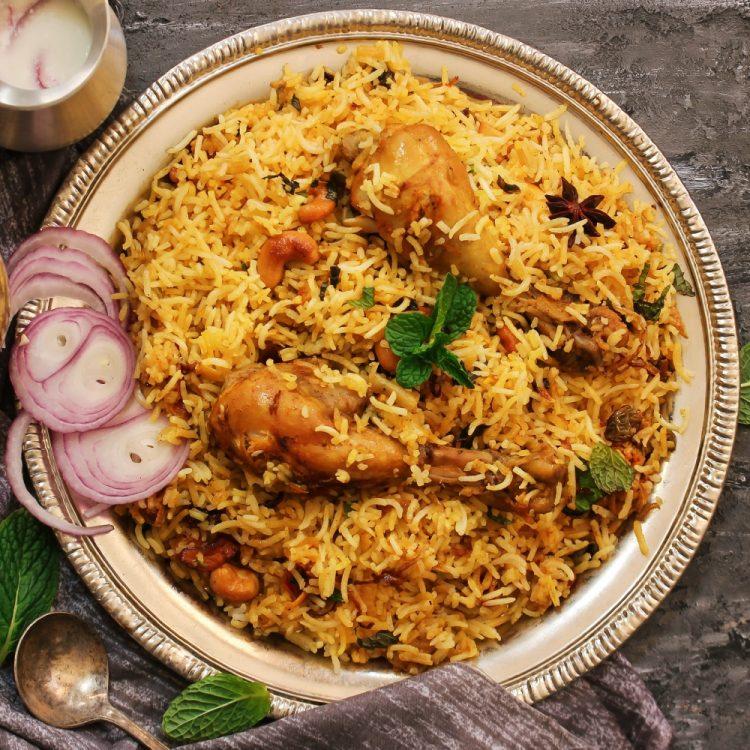
Few dishes carry the weight of history with as much aromatic confidence as Hyderabadi Biryani. Born in the kitchens of the Asaf Jahi dynasty — the Nizams of Hyderabad who ruled the Deccan plateau from the early eighteenth century — biryani is the crown jewel of Indo-Persian cuisine, a culinary monument to the cultural fusion that took place when Persian saffron-rice traditions migrated south through Mughal courts and married the chili-warmed spice palette of South India. To prepare an authentic Hyderabadi Biryani is to participate in a tradition that demands patience, premium ingredients, and an almost reverent attention to layering and heat. At the very center of the dish, threading through every grain of long-grain basmati, lies the indispensable signature of A+ Super Negin saffron.
Kacchi Versus Pakki: The Two Schools
There are two principal methods of preparing biryani, and Hyderabad is the spiritual home of the more demanding of the two: kacchi biryani. In the kacchi method, raw, marinated meat (typically bone-in goat or lamb) is layered directly beneath parboiled basmati rice, and the entire pot is sealed and slow-cooked together so that the meat and rice finish at precisely the same moment. The pakki method, by contrast, fully cooks the meat in its gravy before layering it with the rice and finishing in the oven. Pakki is more forgiving and is the method favored in Lucknow and Kolkata. Kacchi is the high-wire act of Indian cuisine: undercook and the meat is tough, overcook and the rice grains shatter into mush. Done correctly, kacchi delivers a complexity of flavor and texture that no other rice dish on earth can match.
The Marination: Yogurt, Spice, and Saffron
The marination is the heart of kacchi biryani, and it begins the night before. Bone-in goat meat is bathed in thick, full-fat yogurt seasoned with ginger-garlic paste, green chili, Kashmiri red chili powder, garam masala, mint, cilantro, and golden fried onion (birista). The lactic acid in the yogurt slowly tenderizes the muscle fibers, while the spices migrate deep into the meat. At this stage, a small infusion of bloomed saffron is folded directly into the marinade. This early introduction of saffron is essential: the fat-soluble aroma compounds in safranal bind with the yogurt's milk fats and the meat's natural lipids, locking the floral honey notes deep inside the protein where they will remain through the long dum cook.
The Architecture of the Layers
Once the meat has marinated for at least eight hours, the cook parboils long-grain aged basmati rice in heavily salted water seasoned with whole spices: green cardamom, black cardamom, cinnamon stick, cloves, bay leaf, star anise, and a piece of mace. The rice is drained at precisely 70 percent doneness — still firm at the core, with grains that have begun to elongate. The cooker then assembles the biryani in a heavy-bottomed deg or handi: the marinated raw meat goes first, followed by a layer of parboiled rice. The remaining rice is mounded on top, and the entire stack is dressed with a finishing drizzle of bloomed saffron infused in warm milk, a generous shower of crisp fried onions, fresh mint and cilantro leaves, and a pour of ghee. The saffron bloom in milk is critical here: the lipids in the milk carry the saffron's fat-soluble esters deep into the rice grains, while the water-soluble crocin paints alternating streaks of brilliant gold across the white rice, creating the marbled visual signature of a proper Hyderabadi biryani.
The Dum Seal: Slow Steam and Patience
Once layered, the pot is sealed with dough — a simple flour-and-water paste pressed around the rim of the lid to create an airtight barrier. This dum seal is the technological key to kacchi biryani: it traps every molecule of steam, every volatile aromatic, and every droplet of meat juice inside the vessel. The biryani is cooked first on high heat for ten minutes to generate steam, then transferred to very low heat — traditionally a bed of glowing charcoal embers — for ninety minutes to two hours. Inside the sealed pot, the meat releases its juices upward through the rice, while the saffron-and-ghee mixture from the top sinks downward through capillary action. The two streams meet in the middle of the stack, creating a flavor exchange that no quick-cook method can replicate. When the seal is finally broken at the table, the cloud of steam that escapes carries the unmistakable bouquet of saffron, slow-rendered lamb fat, toasted cardamom, and caramelized onion — a sensory event that defines the Hyderabadi table.
The Saffron Standard for Biryani
Because biryani relies on saffron for both visual drama and aromatic identity, the grade of saffron used matters enormously. Low-grade saffron with significant yellow style content will color the rice unevenly, leaving pale, washed-out streaks. Worse, adulterated saffron mixed with safflower or turmeric will impart a flat, hay-like flavor that cannot compete with the richness of the spiced meat. A+ Super Negin saffron, by contrast, is composed of the thickest, deepest-red tips of the stigma, with crocin levels measured at over 270 on the ISO 3632 scale. A single gram of properly bloomed Super Negin saffron is sufficient to color and perfume a biryani for ten guests, lending the dish its proper royal pedigree. At Casa Zafferano, we hand-pack our saffron in airtight glass to preserve those exact properties, ensuring that each thread you commit to a layered biryani performs as it did in the Nizam's royal deg.
Published by Vikram Taneja
More from the Journal
Apr 09, 2026
Moroccan Tagine and Saffron: The Slow-Cooked Soul of North African Cuisine
Inside the conical clay vessels of Marrakech and Fez, saffron meets preserved lemon, ginger, and slow-simmered meat to define one of the world's great cuisines.
Apr 08, 2026
Uzbek Plov: The Saffron-Crowned Centerpiece of Central Asian Hospitality
From Samarkand to Tashkent, the cast-iron kazan and the saffron-perfumed plov define a culinary tradition that has fed Silk Road travelers for over a thousand years.