Apr 14, 2026 · 9 min read · By Vikram Taneja
Afghan, Iranian, Spanish, and Kashmiri Saffron: A Side-by-Side Origin Guide
"Not all saffron is created equal. Compare the chemical, sensory, and historical profiles of the world's four great saffron-producing regions."
The world's saffron production is concentrated in a remarkably narrow band of arid and semi-arid territory stretching from the western Mediterranean through southwest Asia and into the Himalayan foothills. Within this band, four regions account for nearly all globally significant production: Iran, Afghanistan, Spain, and the Kashmir Valley of northern India. Each region produces saffron with subtly different chemical signatures, sensory profiles, and cultivation traditions, shaped by local soil, altitude, climate, and processing practice. For serious saffron buyers, understanding these regional distinctions is essential to making informed choices and recognizing the genuine variation that exists within the world of premium saffron.
Iranian Saffron: The Volume Leader
Iran produces approximately 90 percent of the world's saffron, with the vast majority coming from the Khorasan provinces in the northeast of the country. Iranian saffron benefits from millennia of agricultural refinement, with cultivation practices passed down through generations of farming families. The chemistry of Iranian saffron typically shows strong crocin levels (often 200-260 on the ISO 3632 scale) with somewhat lower safranal compared to other origins. Iranian production has historically anchored the world saffron market and remains the standard against which other origins are measured. The main grades distinguished in Iranian trade are Sargol, Negin, and Super Negin, each progressively more thoroughly trimmed and quality-sorted.
Afghan Saffron: The Rising Premium
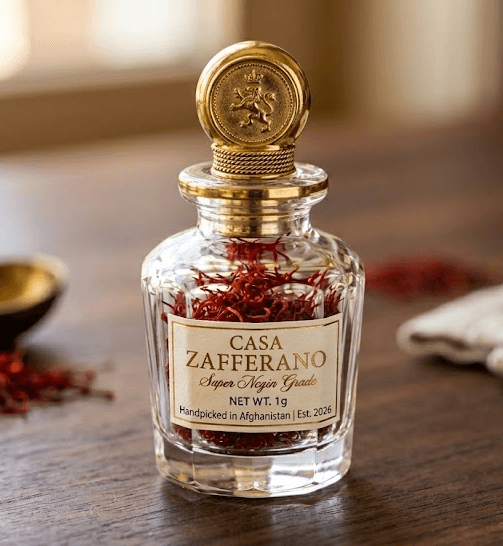
Afghan saffron — particularly from the Herat province in the country's west — has emerged over the past two decades as one of the most chemically impressive saffrons in the global market. Herat's combination of high-altitude growing fields (1,000-1,400 meters above sea level), dry continental climate with stark temperature swings between day and night, mineral-rich glacial-runoff soils, and absence of industrial pollution produces stigmas with exceptionally high crocin concentrations — frequently testing above 270 on the ISO 3632 scale, well into the top tier of measured saffron chemistry. The hand-trimming traditions in Herat, often led by experienced women trimmers, produce some of the most visually consistent Super Negin saffron in the world. This is the saffron Casa Zafferano sources exclusively from, and it is the region that increasingly defines the upper end of premium-grade saffron.
Spanish Saffron: The Mancha Tradition
Spain's saffron tradition centers on Castilla-La Mancha, where the hot dry summers and cold winters of the central Iberian plateau mirror the climate of the Iranian saffron belt. Spanish La Mancha saffron earned its own Protected Designation of Origin (PDO) status from the European Union in 1999, recognizing the region's distinctive cultivation and processing tradition. Spanish saffron typically shows excellent safranal aromatics, owing largely to the local custom of toasting the freshly trimmed stigmas briefly over a heat source — a step that intensifies the aroma but slightly reduces crocin content compared to the slow-dried Iranian and Afghan styles. Spanish saffron is particularly prized for paella and seafood applications, where its strong aromatic profile cuts cleanly through fish-based broths.
Kashmiri Saffron: The Rare Mountain Crop
The Kashmir Valley of northern India produces a small but historically prestigious quantity of saffron, grown primarily in the Pampore region at altitudes above 1,600 meters. Kashmiri Mongra saffron is famous for its extremely deep red color, thick threads, and a distinctive earthy-sweet aroma profile that differs noticeably from the floral honey notes of Iranian and Afghan saffron. Total Kashmiri production is small — typically just a few tons per year — and the local market absorbs most of it for religious and culinary uses within India. Authentic Kashmiri saffron commands extremely high prices in the global market, though counterfeit Kashmiri saffron is unfortunately widespread, and buyers should verify origin through trusted sellers with documented supply chains.
Side-by-Side Sensory Comparison
Side by side, the four origins reveal subtle but meaningful differences. Iranian Super Negin tends toward a clean, balanced profile with strong color and a moderate floral aroma. Afghan Herat saffron — particularly Casa Zafferano's hand-trimmed A+ Super Negin — typically shows a more intense color (the high crocin signature) combined with a pronounced floral honey aroma that lingers longer on the palate. Spanish La Mancha leans toward a more aggressive, smoky-floral aroma with slightly lighter color, owing to the toasting process. Kashmiri Mongra presents a deeper, almost earthy-honey character with the thickest visible threads of the four origins. None is objectively 'best' — each origin has its loyal users for specific culinary applications, and the choice often comes down to chemistry preference and trust in the supply chain.
How to Choose for Your Kitchen
For most home cooks, the practical choice comes down to two factors: verified ISO 3632 chemistry and supply chain transparency. A Super Negin grade from any of the four major origins, with independent laboratory testing and a documented chain of custody, will outperform an untested or commingled product regardless of region. At Casa Zafferano, we made the choice to source exclusively from Herat for the reasons outlined above — the chemistry, the trimming tradition, the soil and climate, and the smallholder farming model. But the larger principle applies regardless of which origin you choose to support: never buy saffron based on origin alone. Buy based on documented chemistry, verified sourcing, and packaging that preserves what you paid for.
Published by Vikram Taneja
More from the Journal
Apr 09, 2026
Moroccan Tagine and Saffron: The Slow-Cooked Soul of North African Cuisine
Inside the conical clay vessels of Marrakech and Fez, saffron meets preserved lemon, ginger, and slow-simmered meat to define one of the world's great cuisines.
Apr 08, 2026
Uzbek Plov: The Saffron-Crowned Centerpiece of Central Asian Hospitality
From Samarkand to Tashkent, the cast-iron kazan and the saffron-perfumed plov define a culinary tradition that has fed Silk Road travelers for over a thousand years.